
Search Hawaii Inmate Population Records
Hawaii inmate population records cover every person held in state jails and prisons across the islands. You can look up custody status, bookings, and facility rosters through state tools run by the Department of Corrections and Rehabilitation. The main search path is the Hawaii SAVIN/VINE system for current custody and parole status. Court case details are on eCourt Kokua. This page shows where to find Hawaii inmate population data, who keeps it, and how to get copies of the records you need.
Hawaii Inmate Population Overview
Where Hawaii Inmate Population Records Are Kept
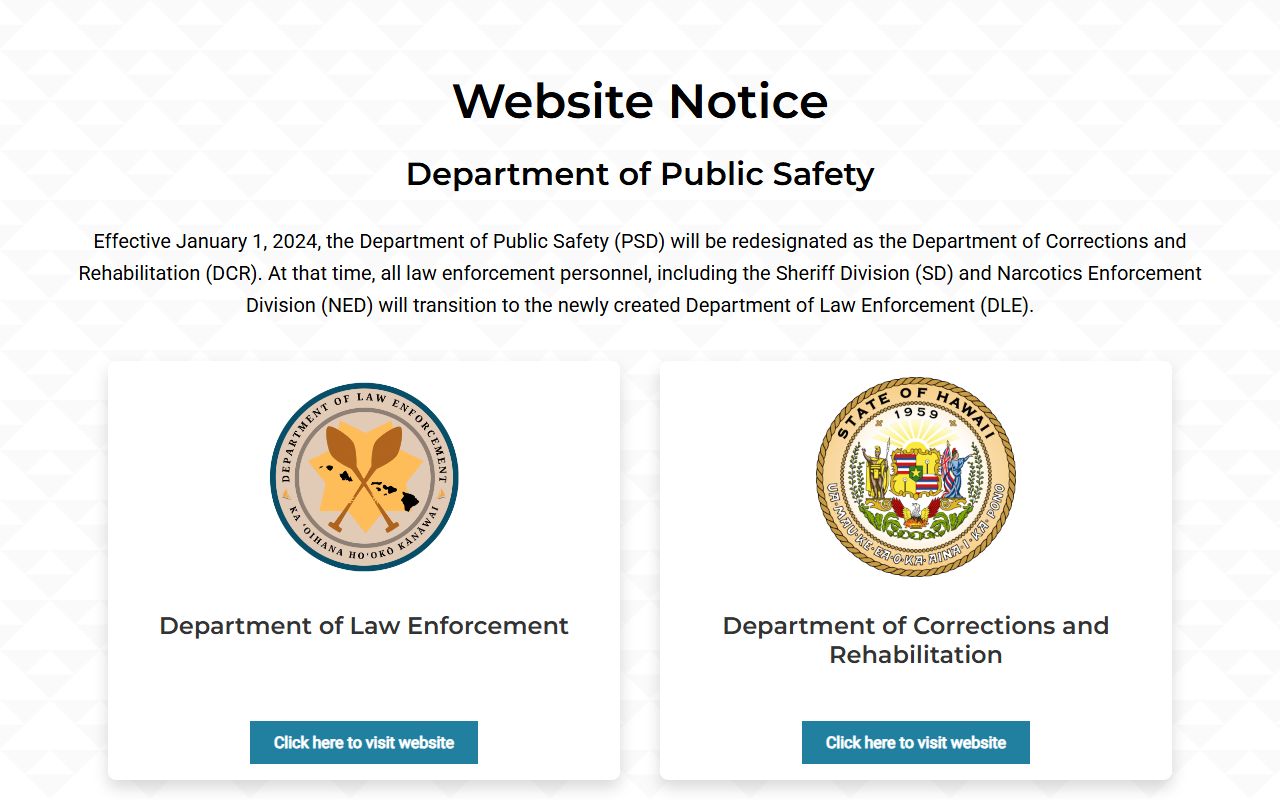
The Hawaii Department of Corrections and Rehabilitation is the main keeper of inmate population data in the state. The agency began on January 1, 2024 when the old Department of Public Safety was split. The DCR now runs all jails and prisons. Law enforcement work was moved to the new Department of Law Enforcement. The state keeps one unified corrections system. Unlike most states, Hawaii has no county jails. All inmate records flow up to the DCR central office at 1177 Alakea Street, Room 400, Honolulu, HI 96813. Phone: (808) 587-1350.
More than 95% of people held in Hawaii will be released at some point. The DCR handles intake, housing, parole, and release. It also manages the out-of-state contract with Saguaro Correctional Center in Arizona, where about 1,400 men from Halawa are housed to ease crowding. The agency posts facility info, visitation rules, mail rules, and contact details for every jail and prison on its website.
The full agency page sits at dcr.hawaii.gov and is the best first stop for any inmate population search in Hawaii.
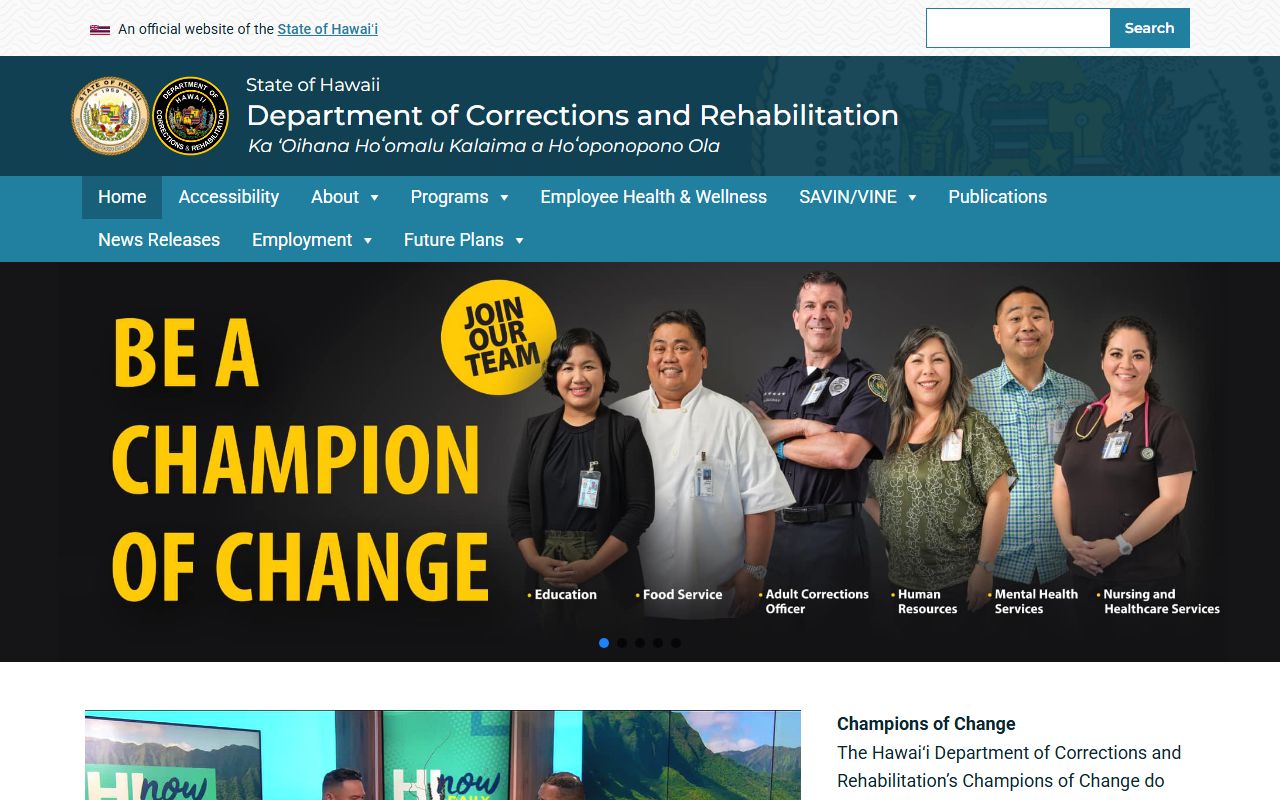
The DCR site lists each Community Correctional Center, each prison, and key programs run statewide. It also links to visit forms, money deposit rules, and the agency's policy files.
Hawaii Inmate Population Search Through SAVIN/VINE
The fastest free way to check the custody status of a person in Hawaii is the SAVIN/VINE system. The full name is the Hawaii Statewide Automated Victim Information and Notification service. It runs on the national VINE platform. The tool is free. It is open 24 hours a day, every day of the year. You can search by Offender ID or by first and last name. Date of birth and age range are extra fields to narrow the result.
Sign up for alerts if you want a call, text, or email when custody status changes. This covers transfers, release, and parole hearings. Basic searches work without an account. Federal inmates and pre-booking holds at police cellblocks are not in this system.
Access the tool at vinelink.vineapps.com or call 1-877-846-3444.
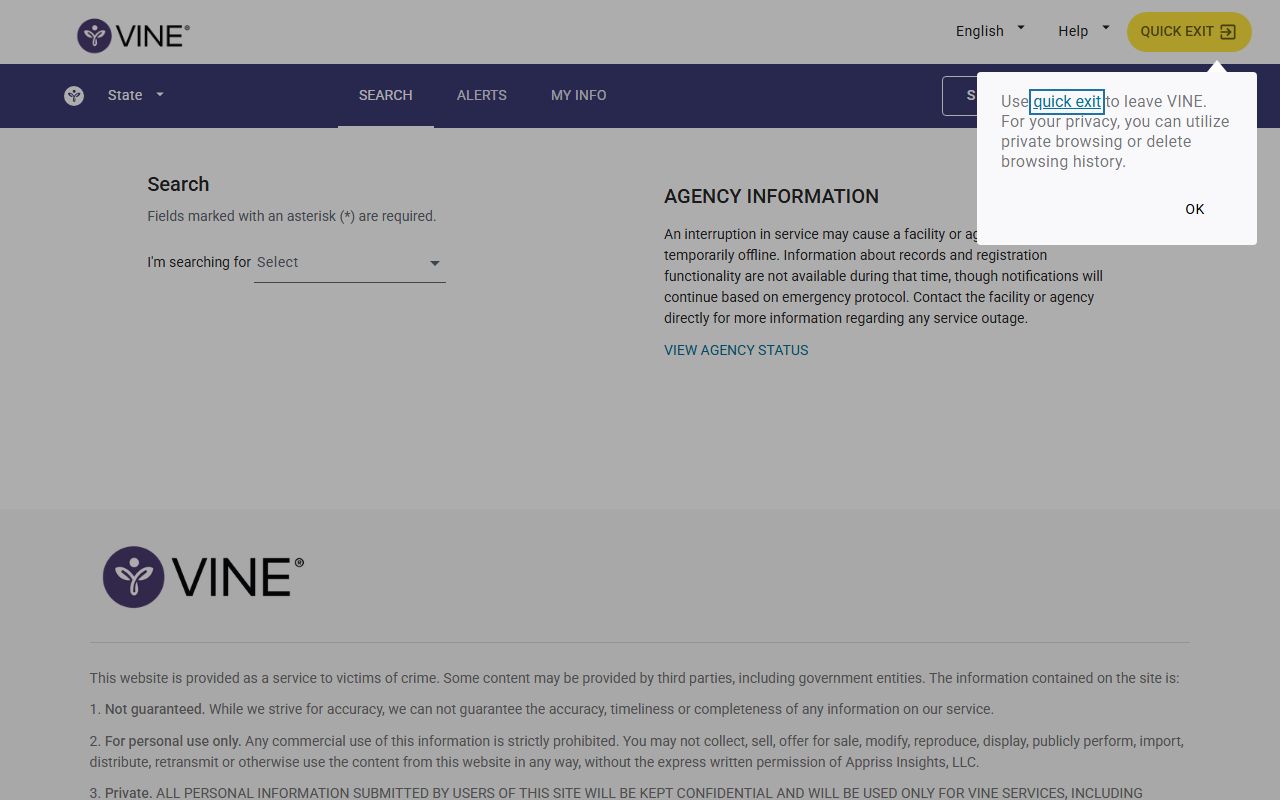
SAVIN results show the current facility and a release date when one is set. The system pulls its data straight from DCR records.
Note: SAVIN/VINE covers state custody only. For federal inmates in Hawaii, use the Federal Bureau of Prisons inmate locator at bop.gov.
Hawaii Inmate Population Court Records
Court case files add context to any inmate population check. Hawaii runs eCourt Kokua as the state-wide public portal. It covers traffic cases, District and Circuit criminal cases, Family Court adult cases, civil cases, Land Court, Tax Appeal Court, and appellate cases. You can search by case ID with a set format. The circuit number, case type, year, and sequence number all go in the search box.
Example case IDs look like 1CPC-17-0000001 or 1CPC-17-1 for criminal cases. The circuit numbers run 1 (Oahu), 2 (Maui), 3 (Hawaii County), and 5 (Kauai). Downloadable papers cost $3.00 per item or 10 cents per page, whichever is higher.
Start your case search at courts.state.hi.us.
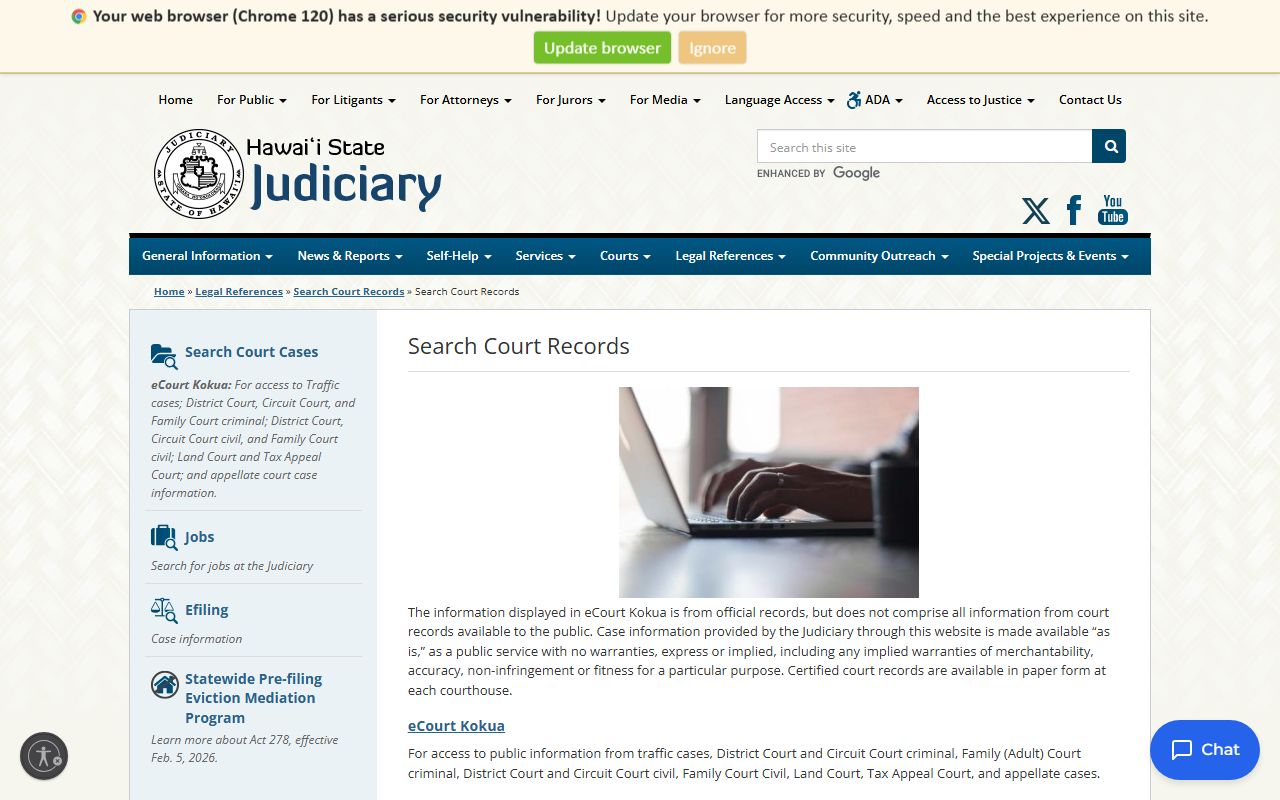
Subscriptions for heavy users are $125.00 per quarter or $500.00 per year and include unlimited downloads. This is helpful for people who track many cases tied to the Hawaii inmate population roster.
Criminal History and the Hawaii Inmate Population
The Hawaii Criminal Justice Data Center is the central place for statewide criminal history files. HCJDC is part of the state Attorney General's office. The agency runs CJIS-Hawaii, the statewide Automated Fingerprint Identification System, the covered offender registry, and the eCrim public conviction site. CJIS-Hawaii holds records from police, sheriffs, prosecutors, all courts, intake centers, community correctional facilities, and probation and parole.
HCJDC is at the Kekuanaoa Building, 465 S. King Street, Room 102, Honolulu, HI 96813. Hours are 8:00 a.m. to 4:00 p.m. Monday through Friday. The office is closed for lunch from noon to 1:00 p.m. and closed on state holidays. Call (808) 587-3279 for criminal history record checks, (808) 587-3350 for offender registration, and (808) 587-3100 for general questions.
Under Hawaii Revised Statutes Chapter 353, the DCR must keep a record of all facts tied to each commitment, sentence, parole, and release for every person held in custody. Section 353-12 covers correctional records and documents. HCJDC content comes from fingerprint data and is the most accurate check method.
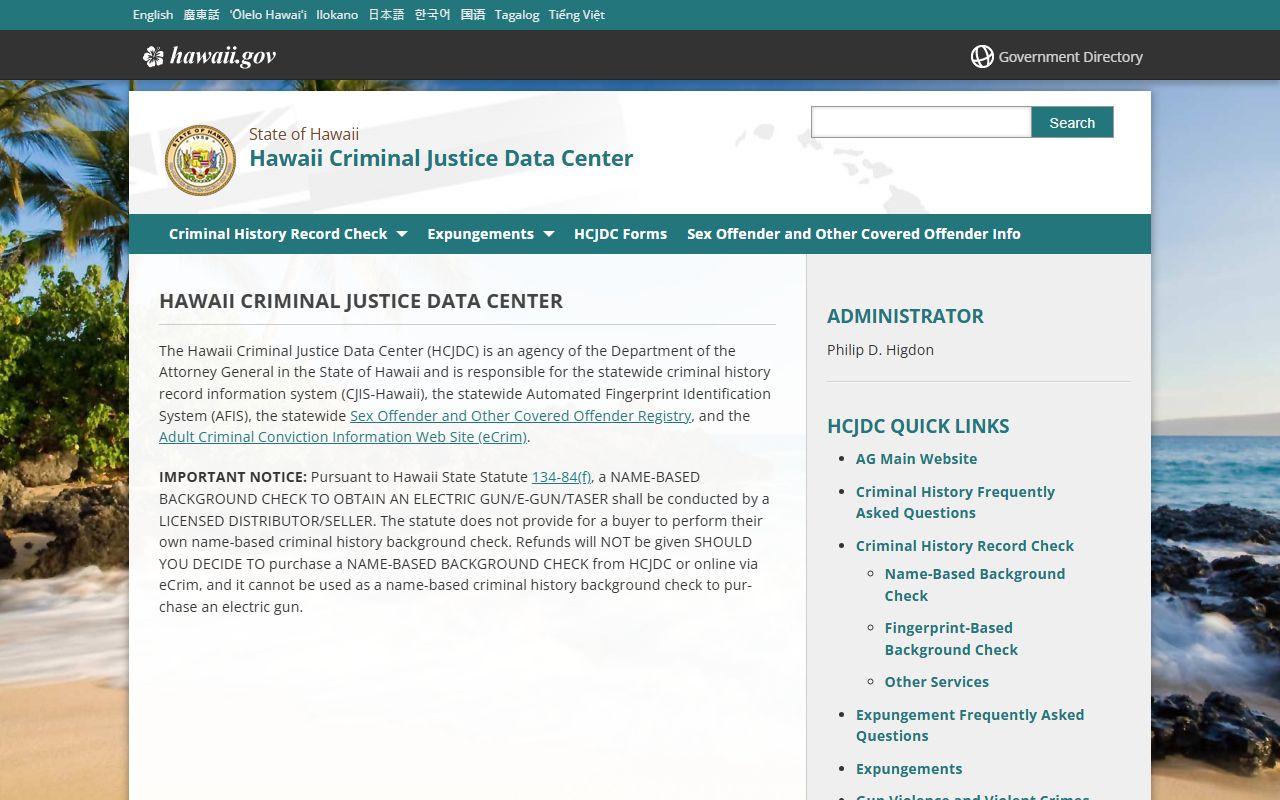
Name-based checks work for quick looks. Fingerprint checks give the cleanest match. Both methods trace back to the same CJIS-Hawaii database.
The public can buy a certified copy of conviction records at the eCrim site. The site holds more than 458,000 offenders and over two million records. See the HCJDC criminal history FAQ for full details on what can and cannot be shared.
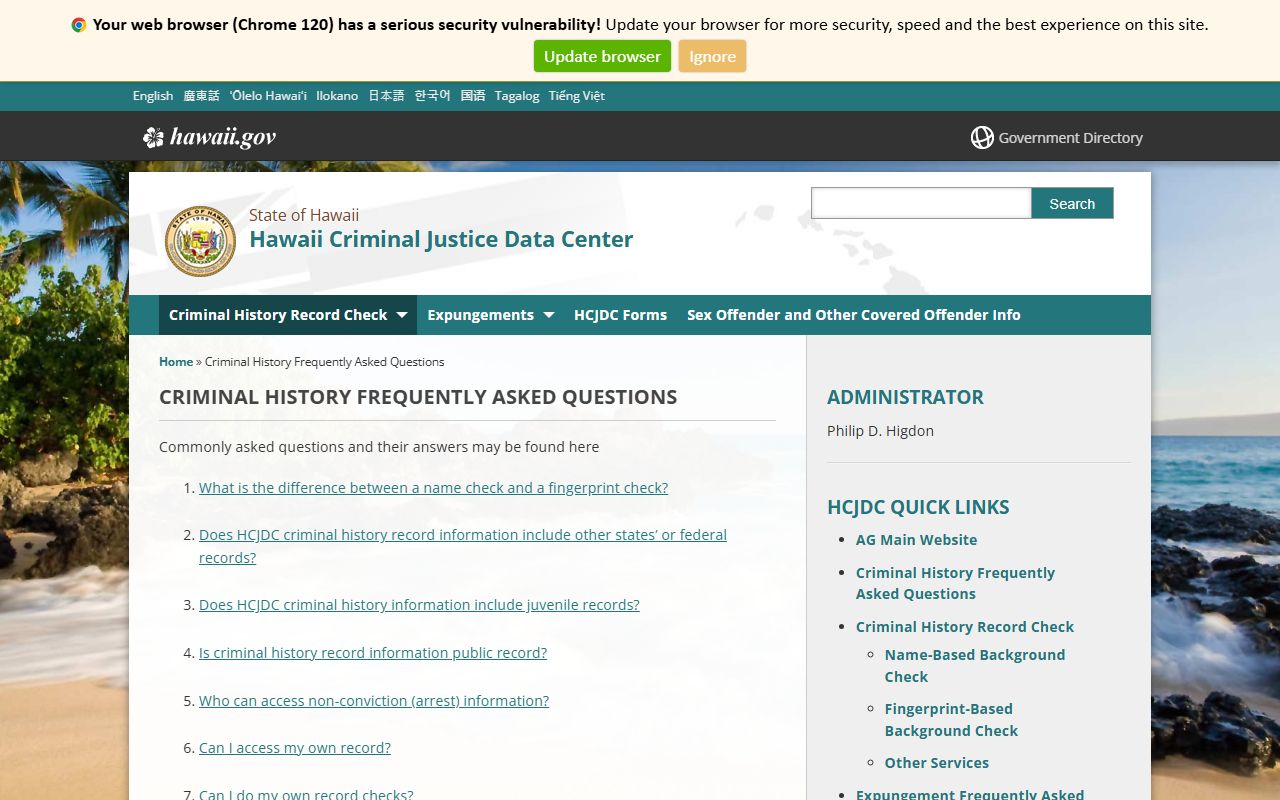
Non-conviction data stays confidential. Only criminal justice agencies and agencies set by state law can see it.
How to Request a Hawaii Criminal History Check
There are four ways to run a check against the Hawaii inmate population history file. Online name-based checks on eCrim cost $5 per search. A certified result is $12 more. In-office and mail-in checks at HCJDC cost $30 per name with an extra $20 for certification. Fingerprint checks cost $55 in office and $35 by mail. Juvenile cases are not part of this file. For juvenile records call the Family Court Juvenile Records Department at 808-954-8190.
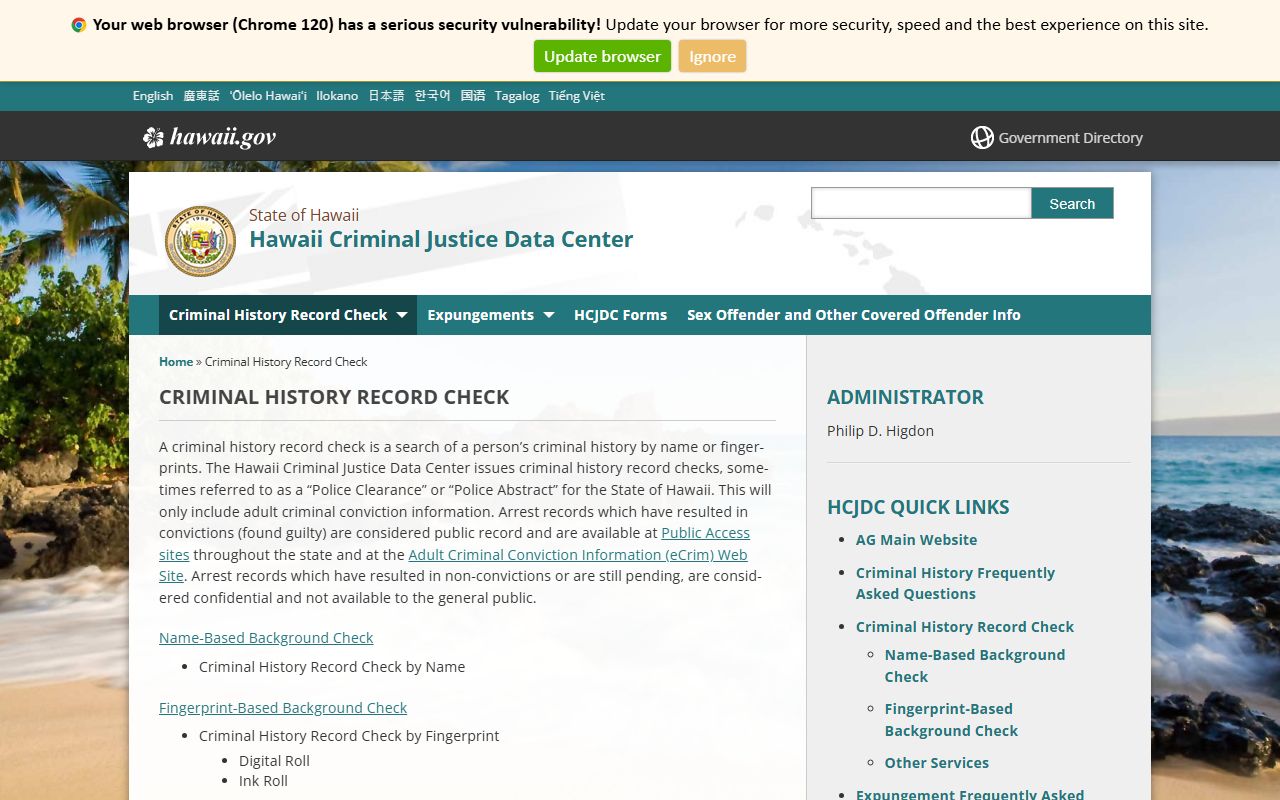
Full filing steps and forms are posted on the HCJDC records check page.
Public Access Sites across the islands sell printouts of conviction records for $25 each. These sites let you skip the trip to Honolulu. The Honolulu Police Department at 801 South Beretania Street is a Public Access Site. Hilo and Kona police stations also serve as Public Access Sites. See the HCJDC public access sites list for locations and hours.
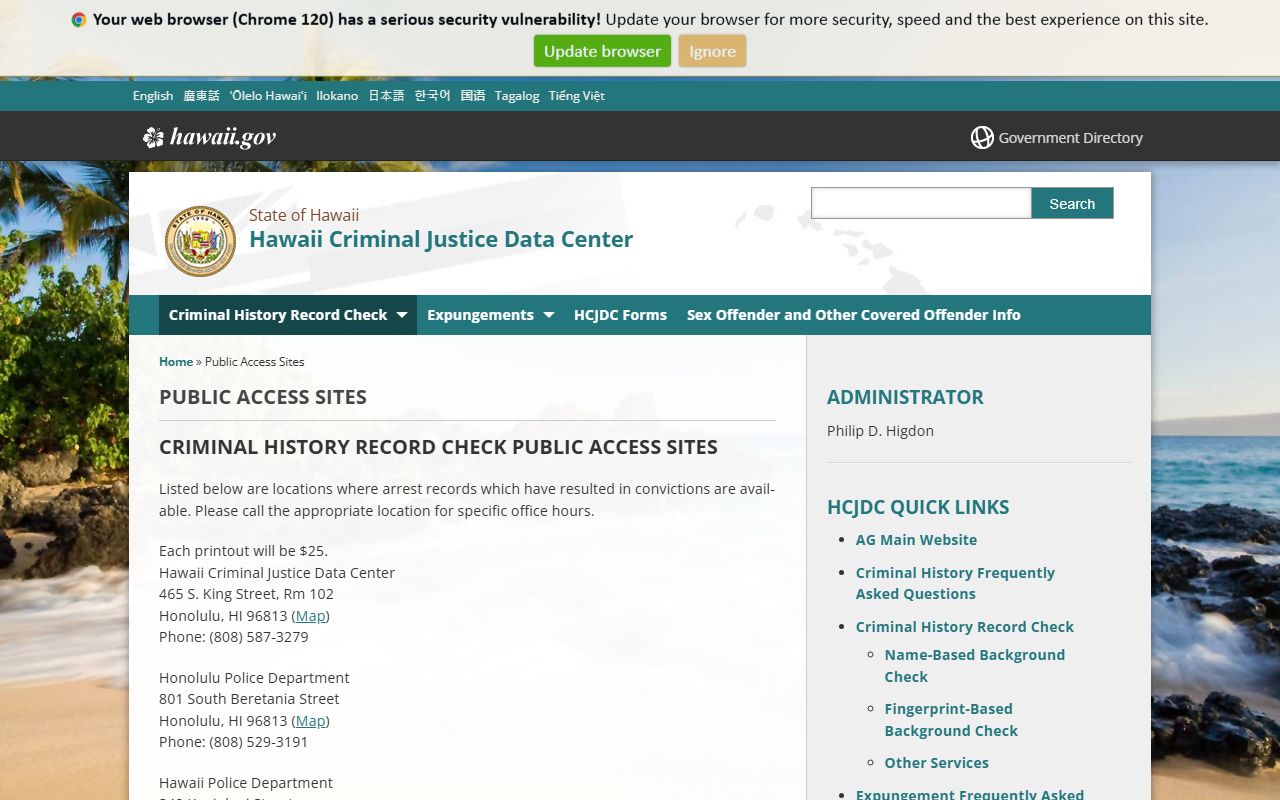
Call ahead before going. Hours change by station, and staff may ask for a photo ID and a cash or card payment for the printout.
Hawaii Inmate Population Facilities
The state runs four jails and four prisons. The four jails are known as Community Correctional Centers. They hold pre-trial detainees and people with short sentences. The four prisons hold sentenced inmates with longer terms.
The four jails are:
- Hawaii Community Correctional Center (HCCC) in Hilo
- Kauai Community Correctional Center (KCCC) in Lihue
- Maui Community Correctional Center (MCCC) in Wailuku
- Oahu Community Correctional Center (OCCC) in Honolulu
The four prisons are Halawa Correctional Facility in Aiea, Waiawa Correctional Facility in Waipahu, Kulani Correctional Facility in Hilo, and the Women's Community Correctional Center in Kailua. Halawa is the largest prison. It has about 1,124 beds. The Women's Community Correctional Center is the only prison for women in Hawaii. It grew from 276 beds to 452 beds after a $55.7 million build project wrapped up in May 2024.
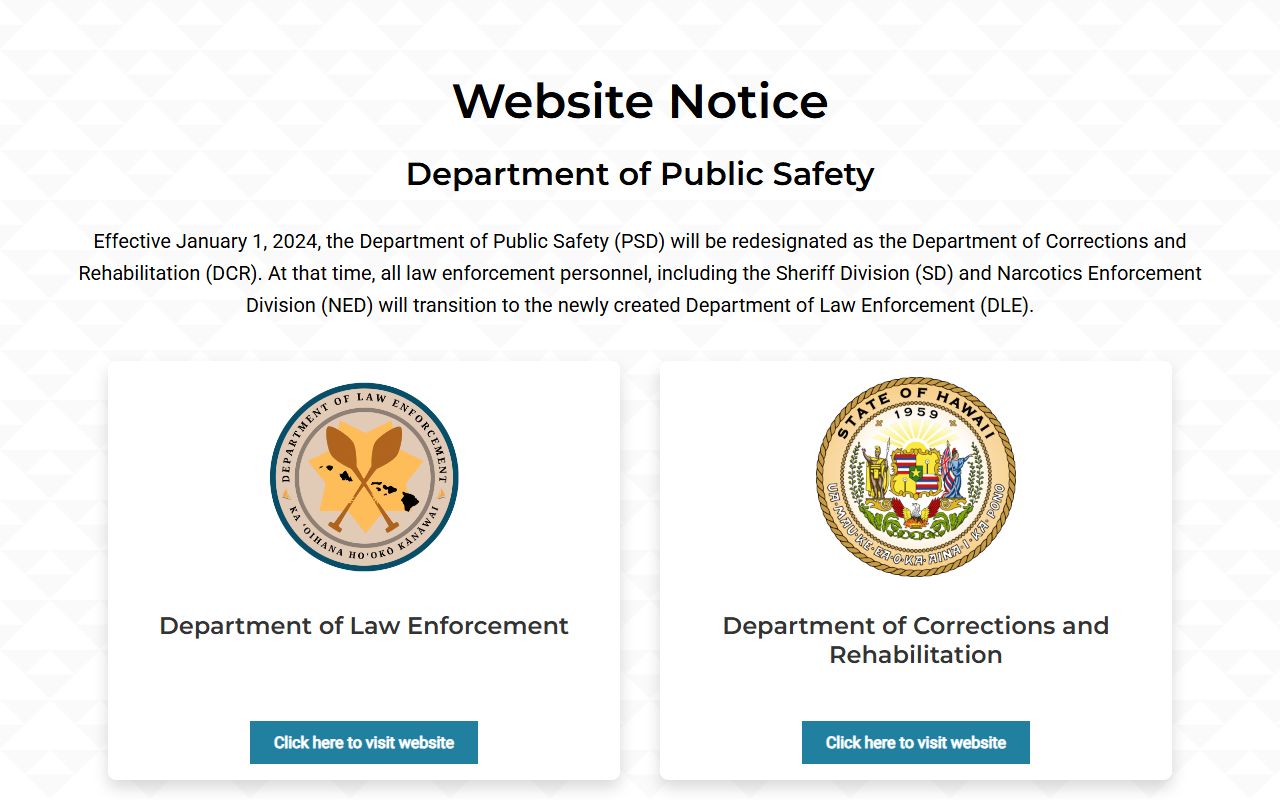
The full facility list with phone numbers is at dps.hawaii.gov.
The Federal Detention Center Honolulu at 351 Elliott Street is the only federal prison in the state. It holds about 220 people at administrative security level. Federal inmate records live in a separate system from the state inmate population file.
Oversight of the Hawaii Inmate Population
The Hawaii Correctional System Oversight Commission watches over the state prison and jail system. Act 179 (HB1552) set up the group. Hawaii Revised Statutes Chapter 353L lists its duties. The commission can look into complaints, tour facilities, and set max inmate counts for each site. It also works with DCR on the reentry program.
The commission has flagged fire safety gaps, limited medical access, short staffing on container-cells, rodent issues, broken temperature gauges, and food handling problems during tours. Monthly and yearly reports pull numbers from each Community Correctional Center and prison. These reports are a key source for anyone tracking the Hawaii inmate population over time.
All HCSOC reports, meeting notices, and minutes are posted at hcsoc.hawaii.gov. Phone: 808-586-1500.
Capacity Note: Several facilities run above design capacity. OCCC holds over 1,000 inmates in a site built for 954. HCCC has been 71% over capacity in recent reports.
Hawaii Public Records Law and Inmate Information
State law backs public access to a big part of the Hawaii inmate population file. The Uniform Information Practices Act (UIPA) is Hawaii Revised Statutes Chapter 92F. It opens state records to the public unless a rule seals them. Section 92F-12(a)(13) calls out information on persons held in a correctional facility as open for inspection.
Public data under UIPA includes the current inmate roster, basic booking info, charges filed, custody status, bond and bail amounts, expected release date, and facility location. Section 92F-13 holds back social security numbers, medical and mental health records, discipline details, precise internal housing locations, victim info, and any data that could hurt facility safety.
Agencies have 10 business days to answer a UIPA request. This may stretch to 20 days with a good reason. Search, review, and copy fees can apply.
The Office of Information Practices at oip.hawaii.gov posts request forms, opinion letters, and guides for UIPA filings on inmate population and other state records.
Key Statutes for Hawaii Inmate Records
Hawaii law spreads inmate rules across a few chapters of the Hawaii Revised Statutes. Section 353-11 sets the terms for facility access and records. Section 353-11.5 lists limits on who may enter a facility. Section 353-12 orders the DCR to log every admission, sentence, commutation, parole, and release. Section 353-2.5 tells the agency to keep records on every person held.
Section 846-9 splits inmate history data into public and private parts. Conviction data is public. Non-conviction data is not. Section 846E-02 makes certain sex offenders register with the chief of police in the county where they live. The registry is run by HCJDC and posted at sexoffenders.ehawaii.gov. Section 831-3.2 covers expungement for arrests that never led to a conviction.
Review the full text of Chapter 353 at law.justia.com.
Hawaii Inmate Work and Reentry Programs
Hawaii Correctional Industries runs work programs inside the jails and prisons. HCI is part of the DCR. Work lines make goods and services for state, city, and county offices. Program areas include furniture, printing, food service, vehicle upkeep, and grounds care. Inmates earn wages. Part of those wages goes to taxes, room and board, victim restitution, and savings for release.
HCI is certified by the National Correctional Industries Association. Full program info is posted at dps.hawaii.gov/correctionalindustries.
Reentry is a core part of each facility plan. Programs cover education, job training, substance use treatment, mental health care, religious services, and culture-based options. The goal is to cut repeat offenses and help people return to family and work. The DCR and HCSOC post program outcomes in their yearly reports.
Hawaii Inmate Population by County
Each county works with a state-run Community Correctional Center. Pick a county below to find the local facility, the police records office, and the circuit court that ties into the roster.
Hawaii Inmate Population by City
The main cities on Oahu, the Big Island, and Maui each tie to a specific jail or prison. Pick a city below for local details.