
Schofield Barracks Inmate Population Search
The Schofield Barracks inmate population is split across three systems. Military, federal, and civilian agencies all hold people taken into custody near this U.S. Army post in central Oahu. Searches may start with the Federal Bureau of Prisons, the Oahu Community Correctional Center, or the Honolulu Police Department. Each path yields a different slice of the same population. This page walks through where to look, what each source holds, and how to find a booking or sentence tied to Schofield Barracks. Use the tools below to get current roster data fast.
Schofield Barracks Overview
Schofield Barracks Inmate Population Basics
Schofield Barracks sits in central Oahu near Wahiawa. The post is home to the 25th Infantry Division. About 14,500 soldiers and dependents live on or near the base. The installation is federal land. That means arrests on base fall under federal or military rules, not state law. Off-base arrests in the surrounding area run through the Honolulu Police Department and the state courts.
The Schofield Barracks inmate population is not one list. A soldier facing court-martial may sit in military holding, then move to a federal site. A civilian picked up on base may go to the Federal Detention Center. A soldier caught off base may end up at OCCC like any other person in Honolulu County. The key is to match the agency to the case.
Use more than one tool. The BOP Inmate Locator covers federal inmates. The state SAVIN/VINE system tracks state custody. Each has its own search field and its own data.
Note: Schofield Barracks is a federal installation, so many arrests and bookings will not show up in state or county inmate searches.
Federal Detention Center Honolulu and the Schofield Inmate Population
Most federal inmates tied to Schofield Barracks cases end up at the Federal Detention Center Honolulu. The address is 351 Elliott Street, Honolulu, HI 96819. Phone (808) 838-4200. It holds about 220 beds at administrative security. The site takes pre-trial detainees and some short-sentence inmates.
To find a person, use the BOP Inmate Locator on the Bureau of Prisons site. Search by full name or register number. The tool lists facility, projected release, and age. It is free. No login is needed. Results load fast.
Federal court cases tied to the post flow through the U.S. District Court for the District of Hawaii. Court filings name the inmate and case number. PACER lets you pull docket data for a small fee. The FDC also holds people held for the U.S. Marshals Service.
FDC Honolulu provides the main data point for federal Schofield inmates. 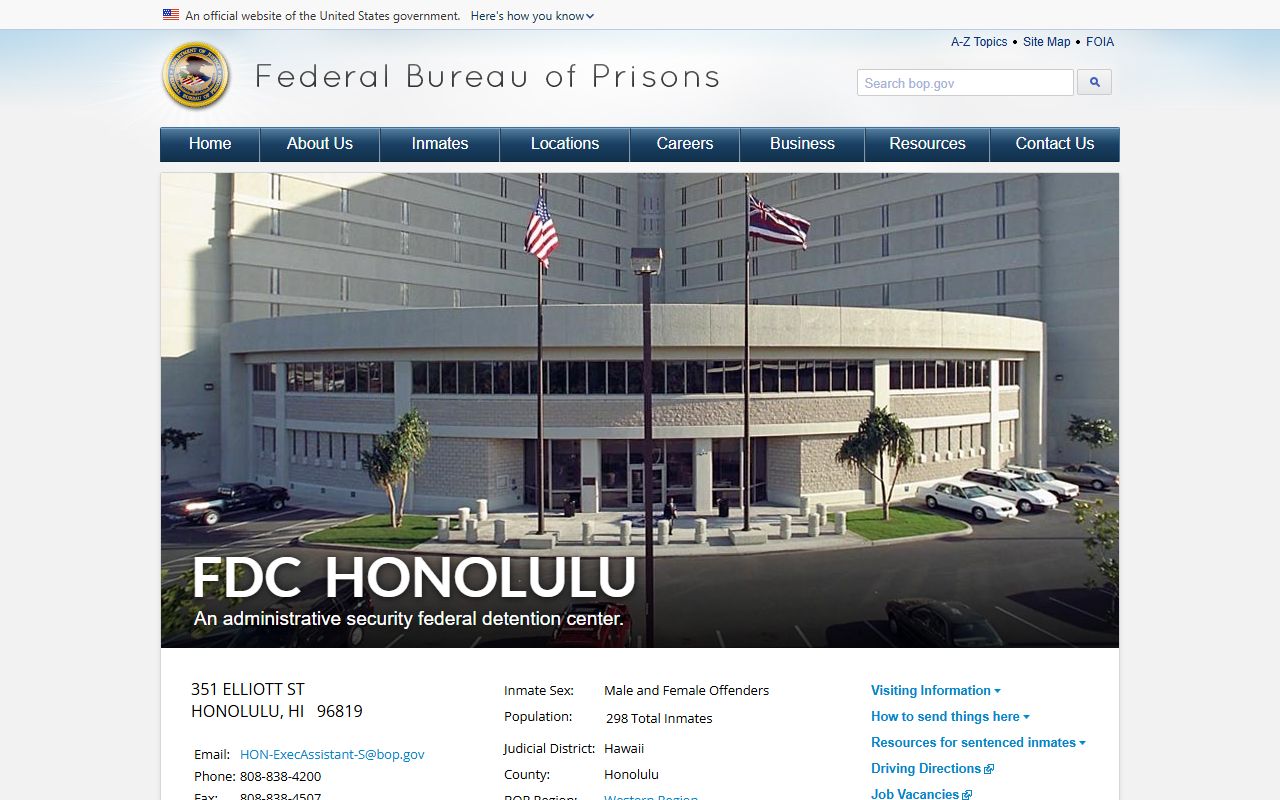 The FDC page lists visiting hours, mail rules, and the Trust Fund deposit options. It is a short drive from the post.
Note: The BOP Inmate Locator shows federal inmates only. It will not list people held by the Army provost marshal or state agencies.
Military Custody and Army Law Enforcement
Soldiers held under the Uniform Code of Military Justice sit in Army custody first. The 25th Infantry Division provost marshal runs the watch at Schofield. Military police book the soldier. A confinement order moves the soldier to a military brig or to FDC under federal contract.
There is no public inmate lookup for military holds. Family members must call the unit chain of command. The Red Cross can help in some cases. Long-term military inmates may move to federal sites on the mainland, such as Fort Leavenworth.
Schofield's military police also respond to on-base calls from civilians. If the case is federal, the suspect may be handed to the U.S. Marshals Service. From there, the case goes to FDC Honolulu and the federal court. This dual track is what makes the Schofield Barracks inmate population hard to track with one search alone.
OCCC and the Civilian Schofield Inmate Population
Many people tied to the Schofield area never see federal court. They live off base or they were arrested by HPD. Those people go to the Oahu Community Correctional Center. OCCC is the main jail for Honolulu County. It holds pre-trial detainees and short-sentence inmates. The state runs it under HRS Chapter 353.
To search OCCC custody, use SAVIN/VINE. The tool needs a full or partial name and date of birth. It shows custody status, facility, and scheduled release. Free alerts send you a text or email when status changes. This is the fastest way to learn if a loved one is still in jail.
OCCC posts facility rules, visit hours, and mail guidelines on its site. 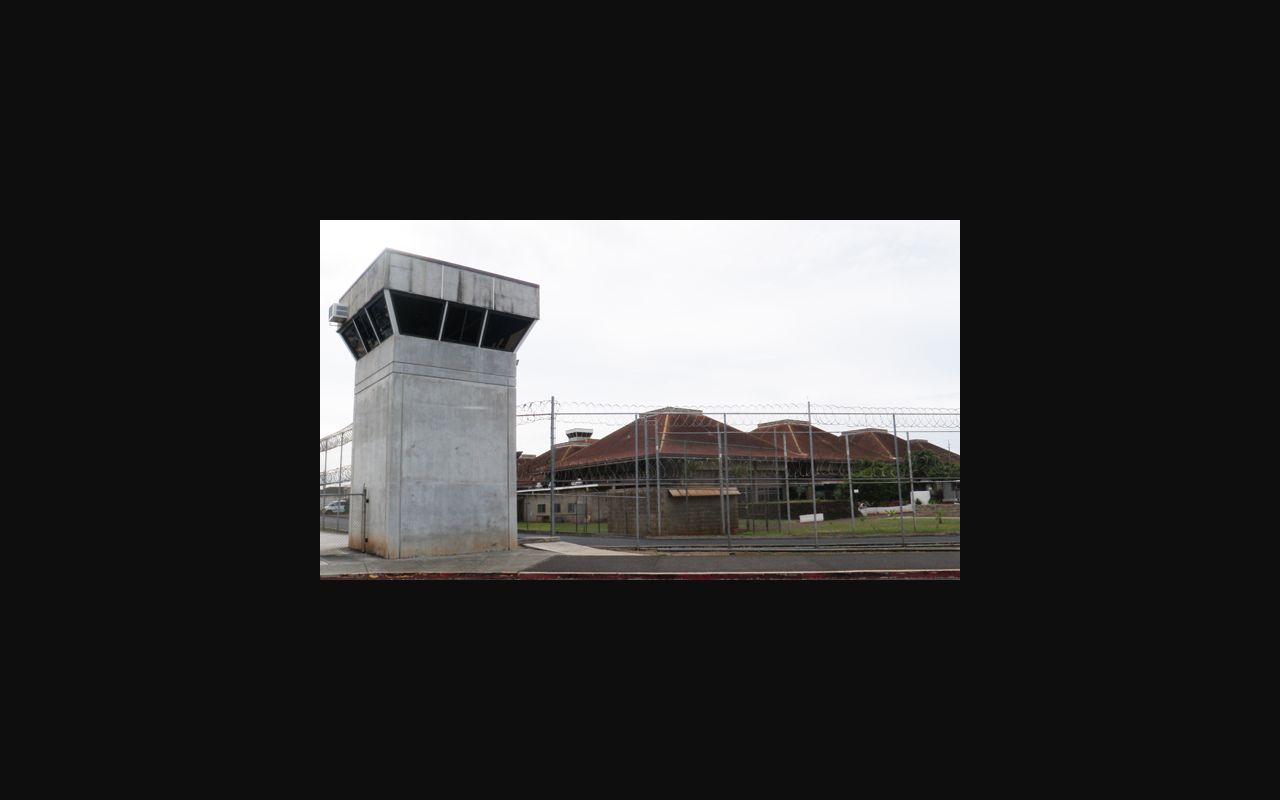 The jail sits in Kalihi near downtown Honolulu. It is about 45 minutes from Schofield by car. Transfers from HPD cell blocks happen every day.
Note: Under HRS Chapter 353, DCR oversees OCCC and posts public data on the civilian inmate population across Hawaii.
HPD District 2 Wahiawa and Arrest Logs
HPD District 2 covers Wahiawa, Mililani, and the land around Schofield Barracks. Off-base arrests are booked at the Wahiawa station. From there, adults go to HPD central booking. The HPD public arrest log posts names, charges, and booking dates for 48 hours. Logs rotate every 14 days per department rules.
The log is a quick way to see if a named person was picked up near Schofield. Check it daily for the best chance. Arrests made late at night may show the next morning. The log does not show release time. Use SAVIN for that.
Police reports are another tool. HPD sells copies for a set fee. Request forms are on the site. Most reports are ready in a few weeks.
Court Records, eCourt Kokua, and Schofield Cases
State charges against civilians arrested near Schofield move to Honolulu District Court or First Circuit Court. Both are in downtown Honolulu. The eCourt Kokua portal lets you search by name or case number. Results show filings, hearings, and case status. The system is free to use.
Federal cases stay out of eCourt Kokua. Use PACER for those. The federal docket covers charges, motions, and sentencing. It also names the detention site. Bench warrants show up on both systems when issued.
Court orders drive moves in the Schofield Barracks inmate population. A judge can set bail, release on own recognizance, or remand. Each of those choices changes the custody data shown in SAVIN or the BOP tool.
Note: HRS § 92F-12(a)(13) makes most court records public, which is why eCourt Kokua shows case filings to anyone for free.
Criminal History Checks Through HCJDC
For full criminal history, use the Hawaii Criminal Justice Data Center. HCJDC runs the state rap sheet. A name-based check costs $30 online. Fingerprint checks run more. The data comes from arrests, dispositions, and some federal feeds.
HCJDC also runs public access sites. A walk-in kiosk in Honolulu lets you pull a printed record for $25. HPD stations hold the same tool in some districts. This is useful when a person needs a copy of their own rap sheet. The law that sets up access is HRS § 846-9.
The state Department of Corrections and Rehabilitation runs the custody side of the data flow.  DCR feeds inmate rosters, transfer logs, and release dates into the HCJDC file. A HCJDC check shows the result of a case but not the live jail status.
Public Records Rights Under HRS Chapter 92F
The Uniform Information Practices Act, HRS Chapter 92F, gives the public a right to see most state records. Inmate rosters, arrest logs, and court data fall under it. HRS § 92F-13 lists a few limits, such as juvenile files and some mental health notes. The Office of Information Practices handles disputes.
If an agency denies a request, file an appeal with the OIP. The office will review the denial and can order release. Most appeals wrap up in a few months. There is no fee to appeal. UIPA is why SAVIN and eCourt Kokua exist in open form.
Sex offender data is a separate track. HRS § 846E-02 sets the public registry. The Hawaii sex offender site lists names, addresses, and photos for qualifying cases. This can touch the Schofield Barracks inmate population when a released offender moves to the area.
Reentry, Sentencing, and Post-Custody Steps
Once a Schofield case closes, some inmates move to work furlough or parole. DCR runs the reentry programs under HRS Chapter 353. The Hawaii Paroling Authority sets terms. Parole hearings are open. Parole status shows up in VINE.
Federal inmates get a different path. The BOP assigns custody level, work detail, and release prep. Some finish time at a halfway house on Oahu. The BOP site lists those contract sites.
Restitution orders may follow the inmate after release. HRS § 831-3.2 guides some civil rights issues tied to a felony record. For the Schofield Barracks inmate population, the end of custody is rarely the end of the case file.